

Invisalign® Clear Aligners
Invisalign Aligners Comfortably Straighten Teeth
We offer orthodontic options designed to fit the busy lifestyle of adults seeking discreet treatment.
Invisalign at Sacred Dental
A great smile is an asset for anyone in today's world. Not only does it express an air of warmth and friendliness, but people you meet are also more likely to perceive you in a positive light. Research in 2019 performed for Invisalign suggests that six out of ten Americans think that people with straight teeth are more likely to succeed. The same number also views a straight smile as projecting intelligence, happiness, and overall health.
At Sacred Dental, the first thing we want to tell our patients is that it's never too late to achieve the smile they've always wanted. Next, If you have visions of wires and brackets, irritated mouth tissues, and frequent adjustments, we are happy to report that modern technology has revolutionized orthodontics. Now, we can offer Invisalign clear aligners for a comfortable, effective, and covert way to a straighter smile without all the metal.

More Reasons to Choose Invisalign
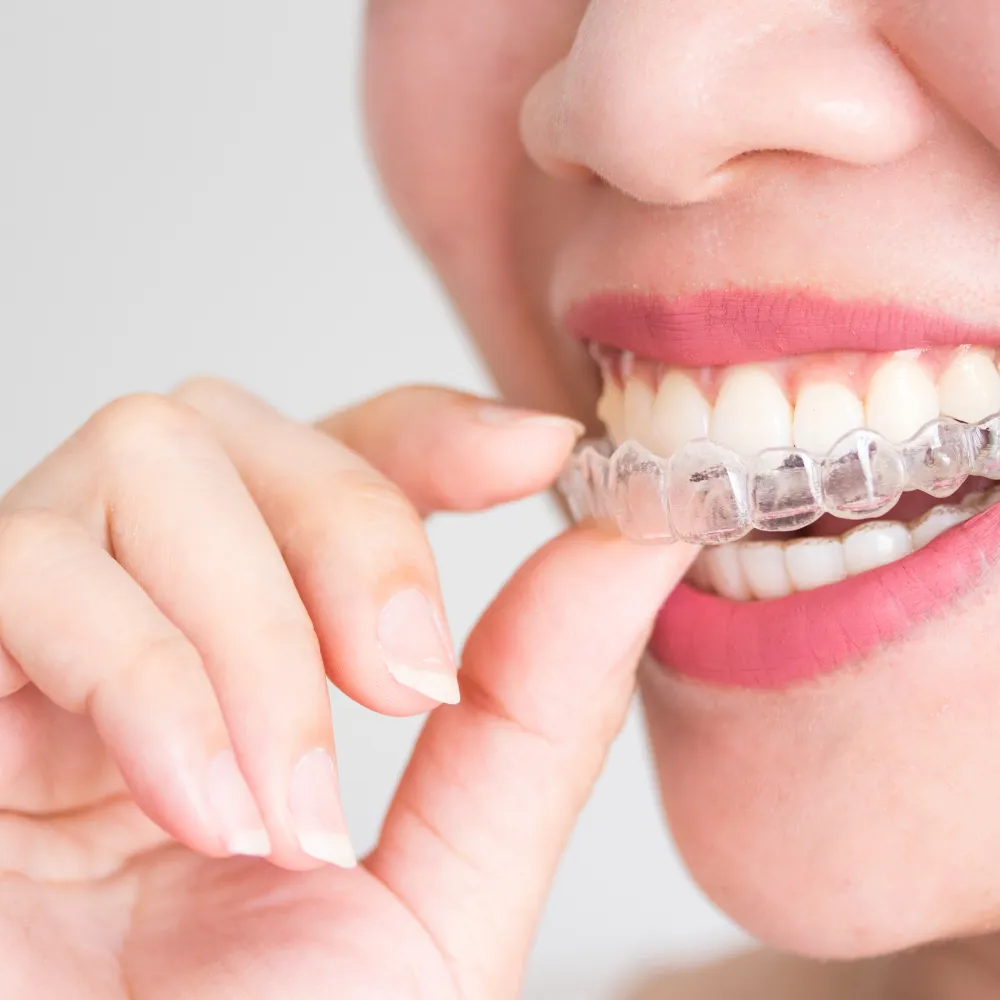
Invisalign is an advanced treatment that uses clear aligner trays to move teeth gently into proper alignment. The system offers patients an option to reposition teeth without so many of the drawbacks of traditional braces.
Invisalign's benefits, when compared to traditional braces, are:
Comfort– The Invisalign material is smooth and molded for an effortless fit on your sensitive cheeks and gums. And because your aligners are removable, you may eat and drink, as well as floss and brush, without being impeded by an orthodontic appliance.
Effectiveness– On average, Invisalign is as effective as conventional braces. However, Dr. Agatha Nwizu will make such a complete assessment of your smile alignment needs that if he recommends Invisalign, you can feel assured that you'll be pleased with the results.
Discretion– As the name implies, Invisalign aligners are transparent, molded to your teeth to be completely inconspicuous. Even if the tray becomes slightly discolored, the fact that your change trays about every two weeks mean you'll have a fresh, clean aligner more often than not.
Quickness– Invisalign is designed to move teeth quickly, and we can often achieve the desired result in as little as twelve months.
Invisalign Fits Your Conyers and Stockbridge Lifestyle
The Invisalign system requires fewer dental appointments than traditional braces. Instead of coming in once a month for tightening brackets and wires, patients swap out trays every two weeks and come to the office about six weeks for a progress check. The design of traditional braces makes it difficult to clean your teeth thoroughly, leading to decay and gum disease.
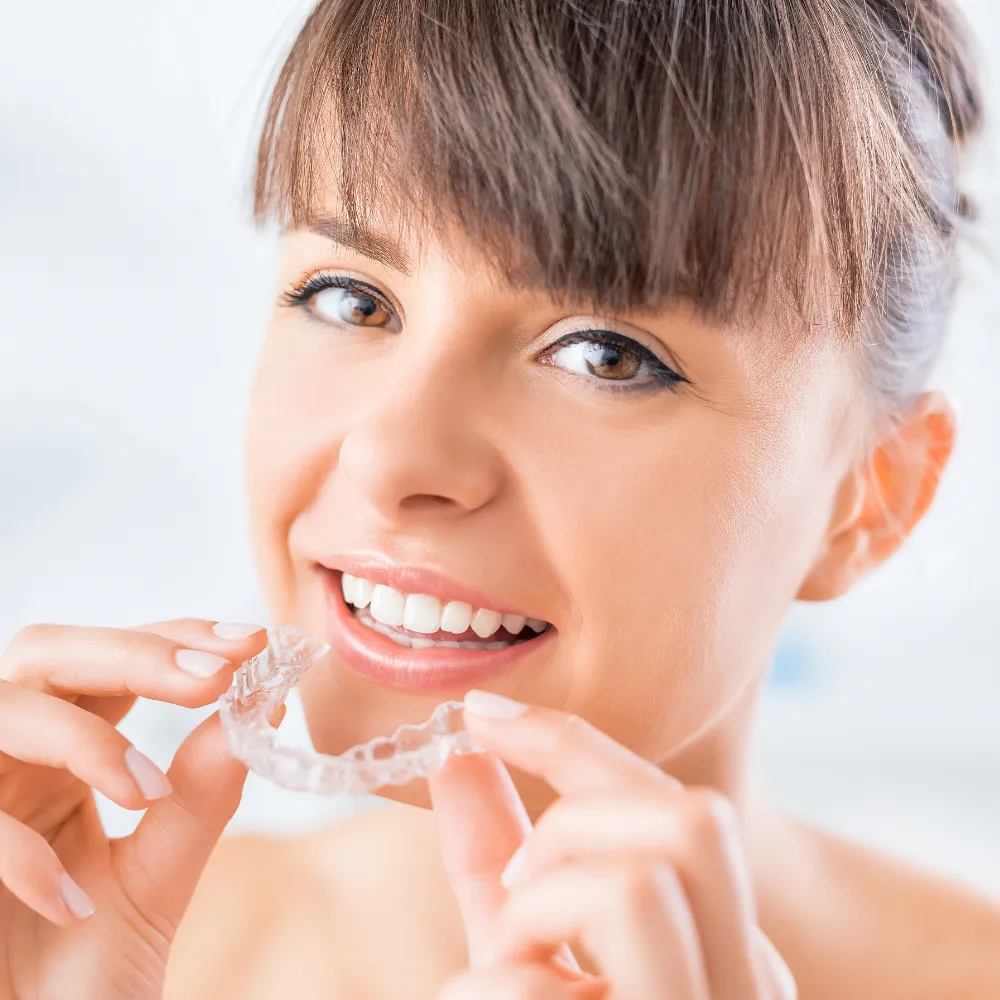
With Invisalign, it's easy to maintain proper oral hygiene because you take the trays out and brush your teeth thoroughly. Your Invisalign treatment is customized specifically for you. The entire treatment plan is mapped out digitally in advance, and you will receive several sets of clear Invisalign aligners designed to guide your teeth into the proper position. You need to wear each set for at least 22 hours a day, removing them only to eat and brush. After two weeks, you will switch to the next set of aligners.
Frequently Asked Questions
Question 1: What is the difference between clear aligners and traditional braces?
Clear aligners are a series of trays that help move teeth into proper alignment. Generally, aligners areswitched out every two weeks. Aligners need to be worn all day to ensure proper movement of theteeth, but can be removed for eating or brushing. Traditional braces move teeth into place by usingwires and brackets that are bonded to the teeth. Traditional braces move teeth faster than aligners.Some people may find the brackets and wires involved with traditional braces cumbersome or notesthetically pleasing, in which case they can use aligners to move their teeth.
Question 3: How long does Invisalign take?
Adult braces like Invisalign have become increasingly popular because they straighten teeth without the discomfort or appearance of metal braces. Invisalign uses a series of clear, removable aligner trays that gradually shift your teeth into place. Treatment time varies by patient and can range from a few months to about two years.
For best results, aligners should be worn 20–22 hours per day and removed only for eating and brushing. This flexibility is one of the biggest advantages over traditional braces, which stay on for the entire treatment period.
If you’re considering Invisalign and want to know whether it’s right for you, schedule a consultation to discuss your orthodontic needs and smile goals.
Question 4: Does Invisalign fix and overbite?
You’ve probably seen the results—people of all ages showing off straight, confident smiles thanks to Invisalign. But can it really correct an overbite, or are traditional braces the better option?
An overbite occurs when the upper teeth extend too far over the lower teeth. It can develop due to genetics, jaw misalignment, or habits like thumb-sucking, and may contribute to jaw pain or TMJ issues.
Can Invisalign fix an overbite?
Yes—Invisalign can effectively correct most mild to moderate overbites. While very complex cases may still require traditional braces, clear aligners are a proven solution for many orthodontic concerns. They’re nearly invisible, comfortable to wear, and removable for eating, brushing, and flossing, making treatment easy to integrate into daily life.
Question 5: Are there any age restrictions for using Invisalign?
While Invisalign has age guidelines, they’re fairly simple. The treatment is generally recommended for teens and adults because younger children may not yet have all their permanent teeth—something essential for clear aligner therapy to work effectively. Invisalign also requires consistent wear (20–22 hours per day for about 12–18 months), which can be a challenge for younger children who may struggle with the responsibility.
In certain cases, Invisalign may be used for younger patients with specific orthodontic needs, but these situations are uncommon. Ultimately, the right age for Invisalign depends on the individual’s dental development and a professional evaluation from a dentist or orthodontist.


Stockbridge Location
4362 N. Henry Blvd,
Stockbridge, GA 30281
Hours of Operation
Fridays & Mondays: 9am to 5pm
Tuesday To Thursday: Closed
Conyers Location
1360 Dogwood Dr SE,
Conyers, GA 30013
Hours of Operation
Fridays & Mondays: Closed
Tuesdays-Thursdays: 9am to 5pm
© Copyright 2026 | GIVR MEDIA | All Rights Reserved.